Mummies in Massachusetts (21)
|
The Hay/Way/MFA Mummies
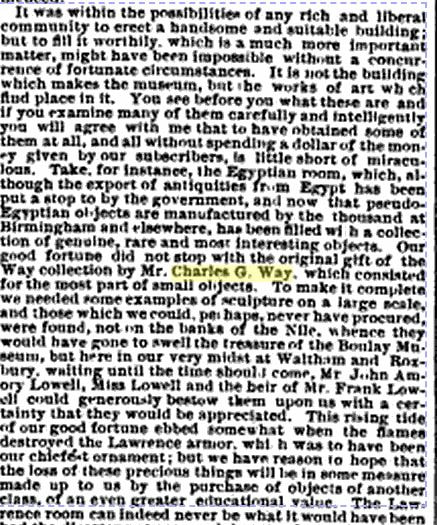
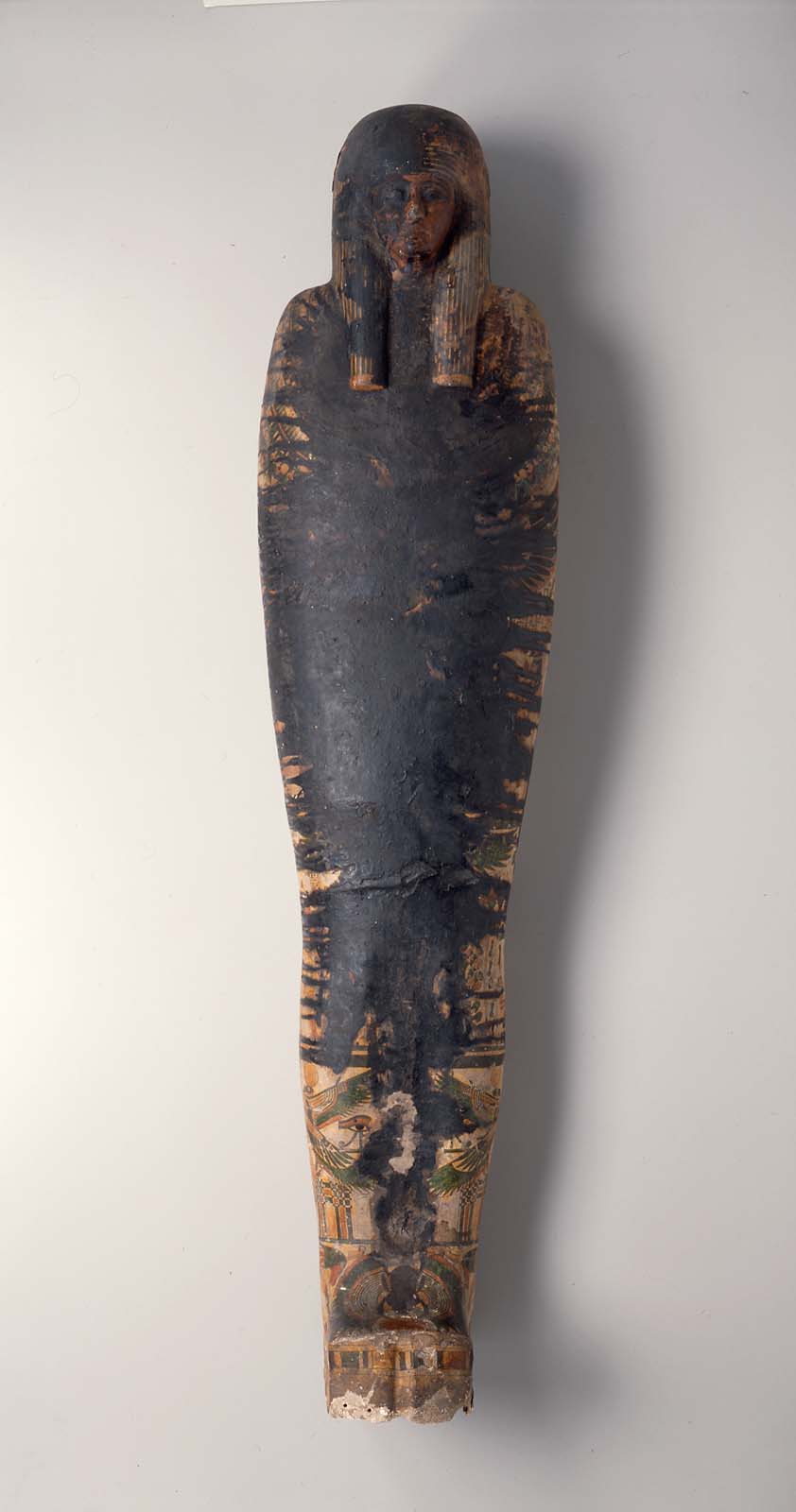
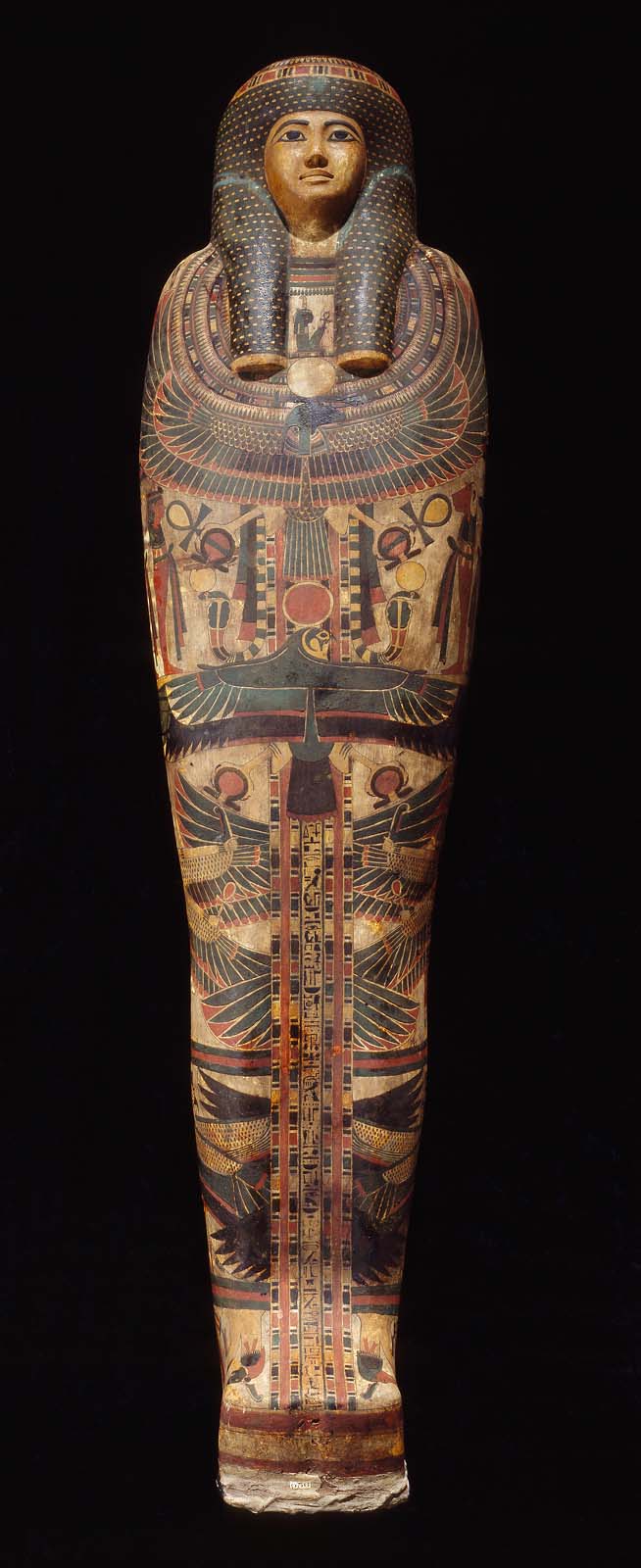
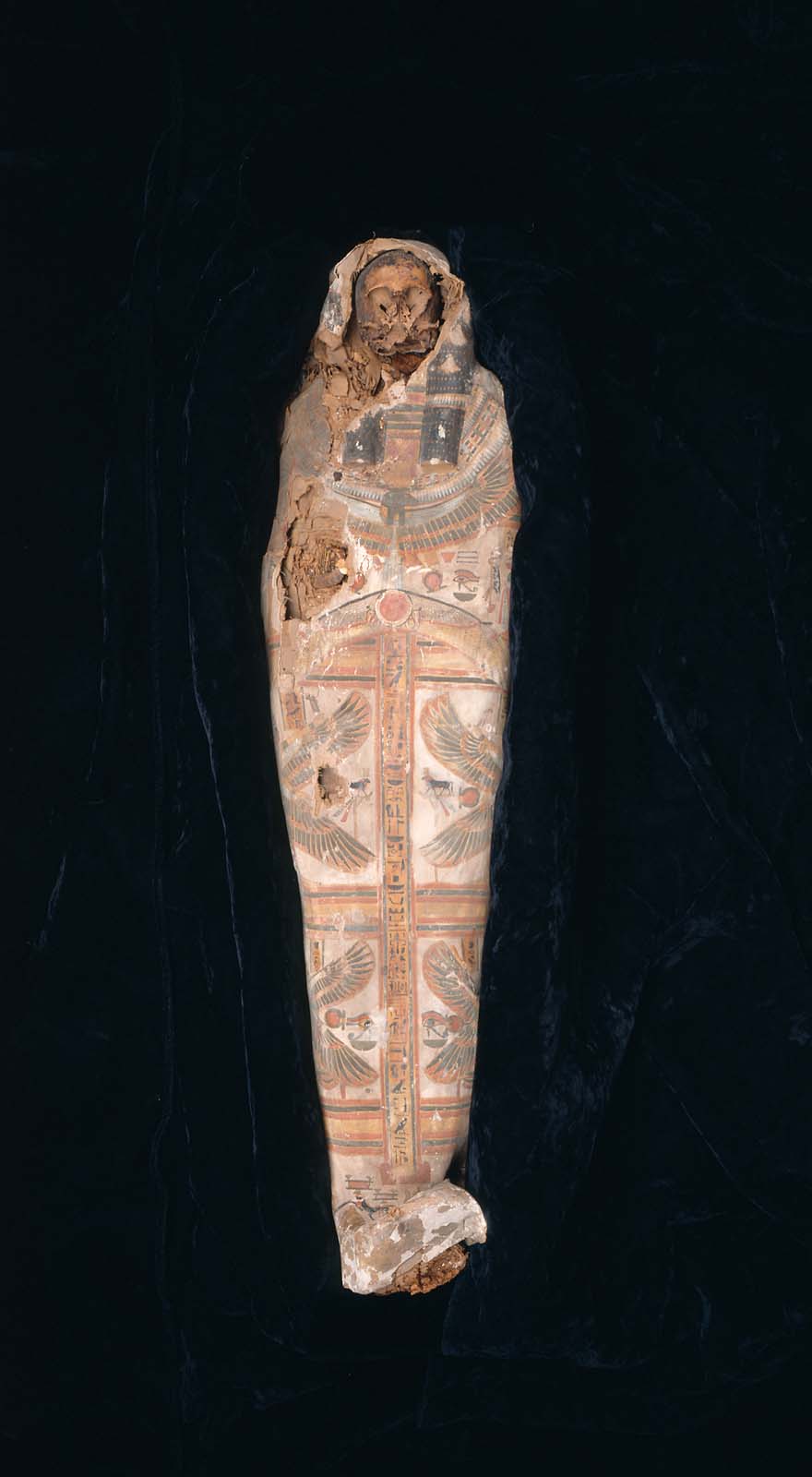
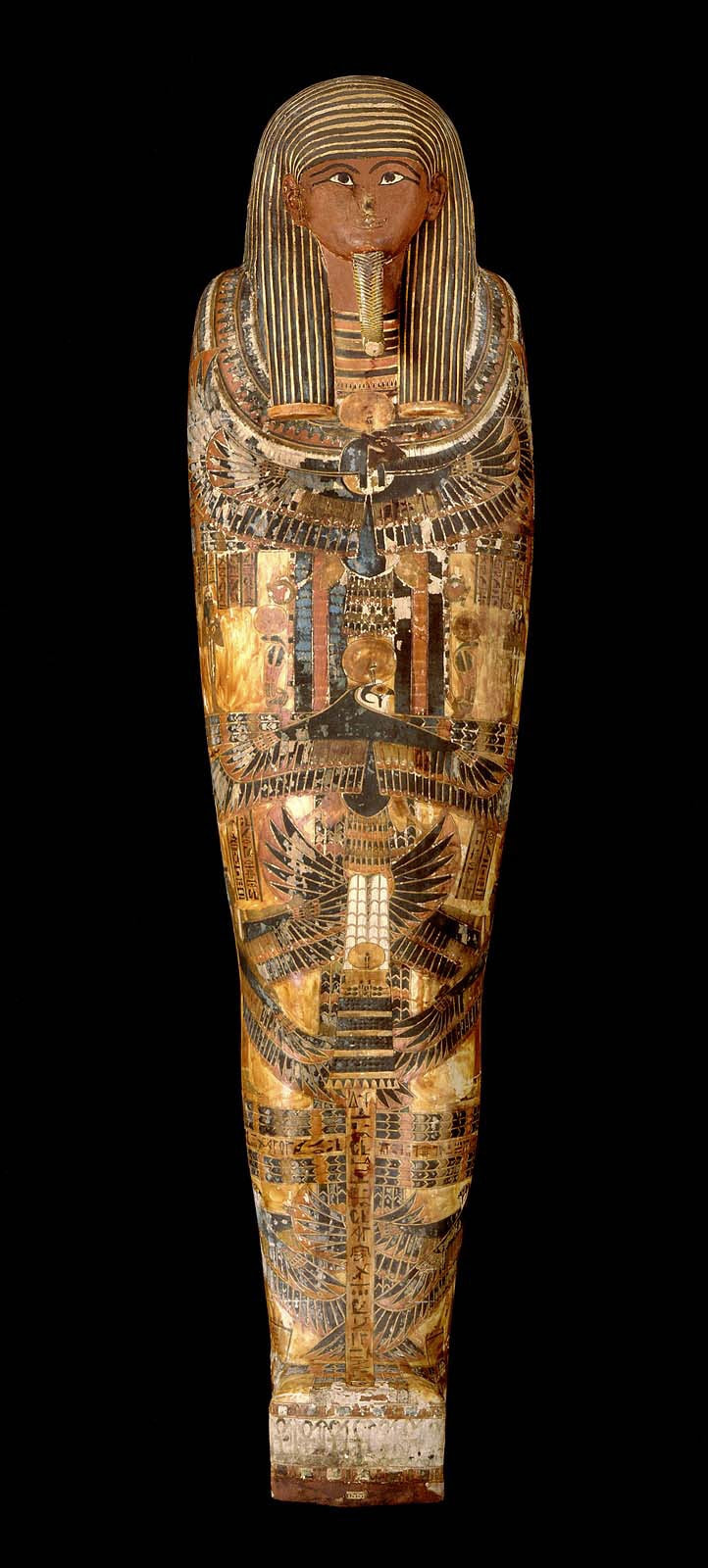
The six beautifully encased 22nd Dynasty mummies pictured below, were collected by Robert Hay during his stays in Egypt (1824-1834). At Hay's death in 1863, his Egyptian collection passed to his son, Robert James Alexander Hay who then offered it for sale through Rollin and Feuardent, 27 Haymarket, London. The objects not acquired by the British Museum were purchased by the Boston banker and collector Samuel A. Way in 1868. At his death the collection passed to his son, the painter, Charles Granville Way who donated it to the MFA 24 days later on June, 28 1872.
On display at Los Angeles County Museum of Art, CA, since May 8, 1974
CT Examination of Eleven Egyptian Mummies, Myron Marx M.D. and Sue Haney D'Auria B.A.: "The mummy Ta-Senet-Net-Hor, Sistrum-player of Amun, had also been disturbed in antiquity by grave robbers. A defect in the cartonnage and linen wrappings, presumably made by a knife. was noted in the right anterior chest wall (Figure 9D). This too was most likely an attempt by grave robbers to extract jewelry and amulets. In this mummy, there was also disruption ofthe seam atthe backofthe cartonnage and images show the linen wrapped mummy sliding out of its cartonnage." She caught the attention of writer, Sean Patrick Traver Summoning the Mummy, by Sean Patrick Traver
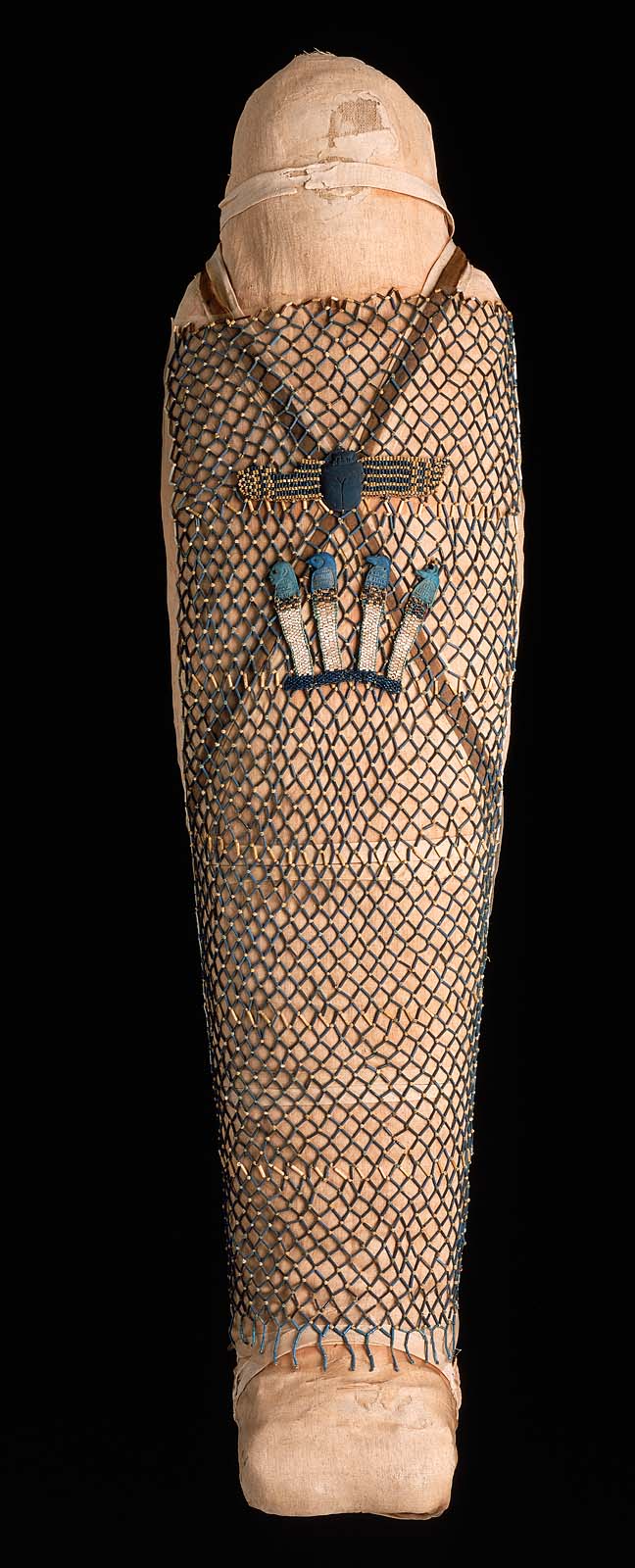
Mummy of Marirtyef
Accession # 12.1518 First Intermediate Period, 2100-2040 BC Woman in her 50's wearing blue faience beads and wrapped in linen. Excavated at Mesheikh, 101A,in 1912 by Harvard University-Boston Museum of Fine Arts Expedition. Assigned to the MFA in division of finds by the government of Egypt. Marirtyef's image requires photography. Reproduction Request Form The mummified head of Djehutynakht
All that is left of Djehutynakht after ancient tomb-robbers ransacked his burial. Accession # 21.11767 "From Deir el-Bersha, tomb 10, shaft A (tomb of Djehutynakht). May 1915: excavated by the Harvard University–Boston Museum of Fine Arts Expedition; assigned to the MFA in the division of finds by the government of Egypt. (Accession Date: March 1, 1921)" The FBI finally cracks the case! (April 5, 2018) Harvard Medicine: How to Unwrap the Secrets of a Mummy, R. Gupta
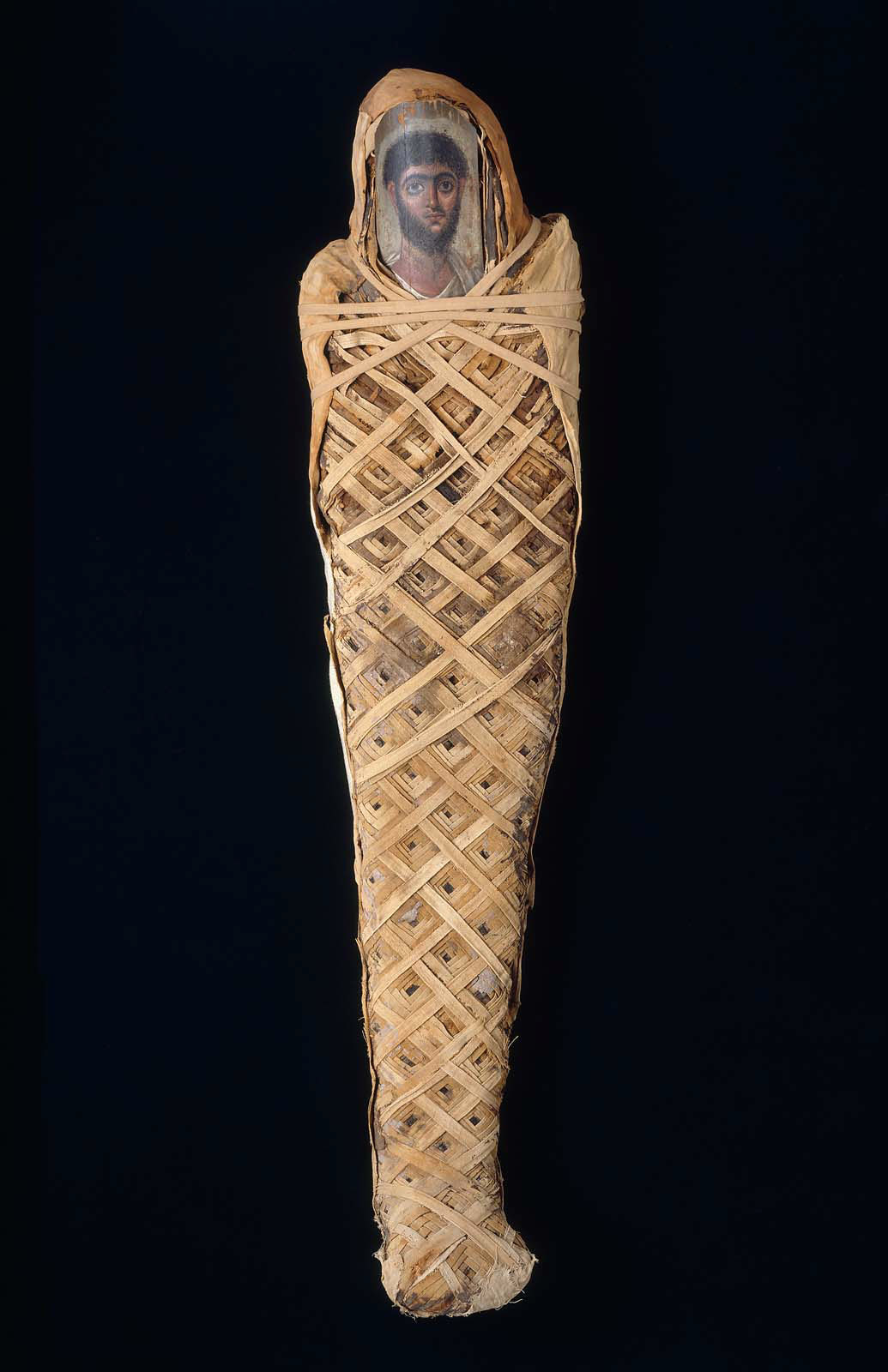
Portrait mummy of a Youth
Accession # 11.2892 Roman Imperial Period, 50 AD Excavated at Hawara by William Flinders Petrie (same expedition as Accession # 11.2891) On view in Gallery 109 Excellent mini-essay on the MFA site on Encaustic portraits |
Massachusetts General Hospital (1)
Fourth Floor, Bulfinch Building The Ether Dome Padihershef 26th Dynasty (663-525 BC) Thebes 20-30 years of age Father: Iref-Iaen-Hershef Mother: Heribes-enes Occupation: Stone-cutter of the Necropolis Padihershef is famous for being the first mummy to be brought to the United States. He was purchased by the Dutch merchant and Consul-General of the Netherlands at Smyrna , Jacob van Lennep. The purchase was arranged by Lennep's cousin, Lee, a partner of Lee & Fils, and the British consul at Alexandria. Lennep wished to donate a mummy to a public establishment in Boston, perhaps pursuant to a promise made while in Boston on business. The mortal remains and coffins of Padihershef arrived on the Sally Ann under Captain R.B. Edes in May of 1823. The mummy was delivered to the Boston City Council who in turn thought it best to pass it along to Boston General Hospital. Boston General sagaciously saw in Padihershef a means of raising money for the hospital and other charitable works. Dr. John Warren unwrapped the mummy's head, and Padihershef was sent to Mr. Doggett's Repository of Arts at 16 Market Street where at twenty-five cents a head he made $125 in two days. He remained a popular attraction at Doggett's for several months at which time the the trustees decided to send him on the road. By the end of his eleven city tour he had raised $1500, but by then he was no longer the only mummy in town, and the fickle public rushed to see newer and better mummies.
Richard returns to Smyrna and rejoins the firm. It is then that the company shifts its trading business almost exclusively to the United States. Jacob van Lennep & Co was the first company to ship a cargo of figs to the United States. They also regularly sent large shipments of opium to Baltimore which was ultimately headed for the East Indies and China. Jacob personally made three business trips to Europe and the United States, the last being in the years 1819-22. At various times Jacob tried to acquire British and United States citizenship, but without success, ultimately spending the remainder of his years in Smyrna.
Sources:
The van Lennep Genealogy pp 13-16 Mummies in Nineteenth Century America, SJ. Wolfe (2009) pp 7-34 The Encyclopedia of Mummies, Bob Brier (1998) pp. 136-137 Cambridge (6)
Harvard University Peabody Museum of Archaeology and Ethnology 11 Divinity Avenue, Cambridge, MA 02138 617-496-1027 One of 3 institutions housing mummies founded by the father of modern philanthropy, George Peabody. Mummy Conservation 2020
Pittsfield (1)
The Berkshire Museum 39 South Street (Route 7) Pittsfield, MA 01201 The mummy Pahat (male) In the News: The Bershire Museum defends its most important asset, January 27, 2018 Salem (1)
The Peabody-Essex Museum Originally the Peabody Academy of Science 161 Essex St, Salem, MA 01970 One of 3 institutions housing mummies founded by the father of modern philanthropy, George Peabody. 1 mummy on loan to The University of Rochester Came to the United States late 1800's or early 1900's. Roman Era: 30-330 AD 5 feet, 6 inches tall Between 20 and 30 years of age Teeth in excellent condition A few postmortem broken bones http://www.rochester.edu/pr/Review/V67N2/feature3.htm Springfield
The George Walter Vincent Smith Art Museum 220 State St Springfield, MA 01103 (413) 263-6800 No mummies, but they do own the outer coffin of Massachusetts General Hospital mummy, Padihershef, purchased in 1932. Padihershef was briefly reunited with his outer coffin for an exhibition in 1984-85 when he also received a makeover. Emil Schnorr, chief curator of the museum, "used 900 moistened cotton swabs a day to dab off the ancient dust, cleaned the teeth with a paint remover and steamed and rewrapped the bandages, which had fallen into a tangled mess. He cleaned and restrung the beads and glued the head on straight." Worcester (1)
Worcester Art Museum College of The Holy Cross 55 Salisbury Street Worcester, MA 01609 508.799.4406 Mummy and coffin of Tanetpahekau A young girl, 234 cm. Died 7th Century BC. donated in 1896 by Rev. Peter Skelly. |